The J.K. Rowling Index

List of all J.K. Rowling's writings.

Please read our read Frequently Asked Questions if you have any doubts.


Dolores Umbridge

Index ID: DUPM — Publication date: October 31st, 2014

New from J.K. Rowling

Trait Description
Birthday 26th August
Wand Birch and dragon heartstring, eight inches long
Hogwarts house Slytherin
Special abilities Her punishment quill is of her own invention.
Parentage Muggle mother, wizard father
Family Unmarried, no children
Hobbies Collecting the ‘Frolicsome Feline’ ornamental plate range, adding flounces to fabric and frills to stationary objects, inventing instruments of torture

Dolores Jane Umbridge was the eldest child and only daughter of Orford Umbridge, a wizard, and Ellen Cracknell, a Muggle, who also had a Squib son. Dolores’s parents were unhappily married, and Dolores secretly despised both of them: Orford for his lack of ambition (he had never been promoted, and worked in the Department of Magical Maintenance at the Ministry of Magic), and her mother, Ellen, for her flightiness, untidiness, and Muggle lineage. Both Orford and his daughter blamed Ellen for Dolores’s brother’s lack of magical ability, with the result that when Dolores was fifteen, the family split down the middle, Orford and Dolores remaining together, and Ellen vanishing back into the Muggle world with her son. Dolores never saw her mother or brother again, never spoke of either of them, and henceforth pretended to all she met that she was a pure-blood.

An accomplished witch, Dolores joined the Ministry of Magic directly after she left Hogwarts, taking a job as a lowly intern in the Improper Use of Magic Office. Even at seventeen, Dolores was judgemental, prejudiced and sadistic, although her conscientious attitude, her saccharine manner towards her superiors, and the ruthlessness and stealth with which she took credit for other people’s work soon gained her advancement. Before she was thirty, Dolores had been promoted to Head of the office, and it was but a short step from there to ever more senior positions in the management of the Department of Magical Law Enforcement. By this time, she had persuaded her father to take early retirement, and by making him a small financial allowance, she ensured that he dropped quietly out of sight. Whenever she was asked (usually by workmates who did not like her) ‘are you related to that Umbridge who used to mop the floors here?’ she would smile her sweetest, laugh, and deny any connection whatsoever, claiming that her deceased father had been a distinguished member of the Wizengamot. Nasty things tended to happen to people who asked about Orford, or anything that Dolores did not like talking about, and people who wanted to remain on her good side pretended to believe her version of her ancestry.

In spite of her best efforts to secure the affections of one of her superiors (she never cared particularly which of them it was, but knew that her own status and security would be advanced with a powerful husband), Dolores never succeeded in marrying. While they valued her hard work and ambition, those who got to know her best found it difficult to like her very much. After a glass of sweet sherry, Dolores was always prone to spout very uncharitable views, and even those who were anti-Muggle found themselves shocked by some of Dolores’s suggestions, behind closed doors, of the treatment that the non-magical community deserved.

As she grew older and harder, and rose higher within the Ministry, Dolores’s taste in little girlish accessories grew more and more pronounced; her office became a place of frills and furbelows, and she liked anything decorated with kittens (though found the real thing inconveniently messy). As the Minister for Magic Cornelius Fudge became increasingly anxious and paranoid that Albus Dumbledore had ambitions to supersede him, Dolores managed to claw her way to the very heart of power, by stoking both Fudge’s vanity and his fears, and presenting herself as one of the few he could trust.

Dolores’s appointment as Inquisitor at Hogwarts gave full scope, for the first time in her life, for her prejudices and her cruelty. She had not enjoyed her time at school, where she had been overlooked for all positions of responsibility, and she relished the chance to return and wield power over those who had not (as she saw it) given her her due.

Dolores has what amounts to a phobia of beings that are not quite, or wholly, human. Her distaste for the half-giant Hagrid, and her terror of centaurs, reveal a terror of the unknown and the wild. She is an immensely controlling person, and all who challenge her authority and world-view must, in her opinion, be punished. She actively enjoys subjugating and humiliating others, and except in their declared allegiances, there is little to choose between her and Bellatrix Lestrange.

Dolores’s time at Hogwarts ended disastrously, because she overreached the remit Fudge had given her, stepping outside the bounds of her own authority, carried away with a fanatical sense of self-purpose. Shaken but unrepentant after a catastrophic end to her Hogwarts career, she returned to a Ministry which had been plunged into turmoil due to the return of Lord Voldemort.

In the change of regimes that followed Fudge’s forced resignation, Dolores was able to slip back into her former position at the Ministry. The new Minister, Rufus Scrimgeour, had more immediate problems pressing in on him than Dolores Umbridge. Scrimgeour was later punished for this oversight, because the fact that the Ministry had never punished Dolores for her many abuses of power seemed to Harry Potter to reveal both its complacency and its carelessness. Harry considered Dolores’s continuing employment, and the lack of any repercussions for her behaviour at Hogwarts, a sign of the Ministry’s essential corruption, and refused to cooperate with the new Minister because of it (Dolores is the only person, other than Lord Voldemort, to leave a permanent physical scar on Harry, having forced him to cut the words ‘I must not tell lies’ on the back of his own hand during detention).

Dolores was soon enjoying life at the Ministry more than ever. When the Ministry was taken over by the puppet Minister Pius Thicknesse, and infiltrated by the Dark Lord’s followers, Dolores was in her true element at last. Correctly judged, by senior Death Eaters, to have much more in common with them than she ever had with Albus Dumbledore, she not only retained her post but was given extra authority, becoming Head of the Muggle-born Registration Commission, which was in effect a kangaroo court that imprisoned all Muggle-borns on the basis that they had ‘stolen’ their wands and their magic.

It was as she sat in judgement of another innocent woman that Harry Potter finally attacked Dolores in the very heart of the Ministry, and stole from her the Horcrux she had unwittingly been wearing.

With the fall of Lord Voldemort, Dolores Umbridge was put on trial for her enthusiastic co-operation with his regime, and convicted of the torture, imprisonment and deaths of several people (some of the innocent Muggle-borns she sentenced to Azkaban did not survive their ordeal).

J.K. Rowling’s thoughts

Once, long ago, I took instruction in a certain skill or subject (I am being vague as vague can be, for reasons that are about to become obvious), and in doing so, came into contact with a teacher or instructor whom I disliked intensely on sight. The woman in question returned my antipathy with interest. Why we took against each other so instantly, heartily and (on my side, at least) irrationally, I honestly cannot say. What sticks in my mind is her pronounced taste for twee accessories. I particularly recall a tiny little plastic bow slide, pale lemon in colour that she wore in her short curly hair. I used to stare at that little slide, which would have been appropriate to a girl of three, as though it was some kind of repellant physical growth. She was quite a stocky woman, and not in the first flush of youth, and her tendency to wear frills where (I felt) frills had no business to be, and to carry undersized handbags, again as though they had been borrowed from a child’s dressing-up box, jarred, I felt, with a personality that I found the reverse of sweet, innocent and ingenuous.

I am always a little wary when talking about these kinds of sources of inspiration, because it is infuriating to hear yourself misinterpreted in ways that can cause other people a great deal of hurt. This woman was NOT ‘the real Dolores Umbridge’. She did not look like a toad, she was never sadistic or vicious to me or anyone else, and I never heard her express a single view in common with Umbridge (indeed, I never knew her well enough to know much about her views or preferences, which makes my dislike of her even less justifiable). However, it is true to say that I borrowed from her, then grossly exaggerated, a taste for the sickly sweet and girlish in dress, and it was that tiny little pale lemon plastic bow that I was remembering when I perched the fly-like ornament on Dolores Umbridge’s head.

I have noticed more than once in life that a taste for the ineffably twee can go hand-in-hand with a distinctly uncharitable outlook on the world. I once shared an office with a woman who had covered the wall space behind her desk with pictures of fluffy kitties; she was the most bigoted, spiteful champion of the death penalty with whom it has ever been my misfortune to share a kettle. A love of all things saccharine often seems present where there is a lack of real warmth or charity.

So Dolores, who is one of the characters for whom I feel purest dislike, became an amalgam of traits taken from these, and a variety of sources. Her desire to control, to punish and to inflict pain, all in the name of law and order, are, I think, every bit as reprehensible as Lord Voldemort’s unvarnished espousal of evil.

Umbridge’s names were carefully chosen. ‘Dolores’ means sorrow, something she undoubtedly inflicts on all around her. ‘Umbridge’ is a play on ‘umbrage’ from the British expression ‘to take umbrage’, meaning offence. Dolores is offended by any challenge to her limited world-view; I felt her surname conveyed the pettiness and rigidity of her character. It is harder to explain ‘Jane’; it simply felt rather smug and neat between her other two names.


Previous writing: «

Next writing: »

Thestrals

Index ID: THPM — Publication date: October 31st, 2014

Manifesting as black, skeletal, bat-winged horses, but invisible to all who have never been truly touched by death, Thestrals have a somewhat macabre reputation. In centuries past the sight of them was regarded as unlucky; they have been hunted and ill treated for many years, their true nature (which is kindly and gentle) being widely misunderstood. Thestrals are not marks of ill omen, nor (their spooky appearance notwithstanding) are they in any way threatening to humans, always allowing for the fright that the first sight of them tends to give the observer.

Being able to see Thestrals is a sign that the beholder has witnessed death, and gained an emotional understanding of what death means. It is unsurprising that it took a long time for their significance to be properly understood, because the precise moment when such knowledge dawns varies greatly from person to person. Harry Potter was unable to see Thestrals for years after his mother was killed in front of him, because he was barely out of babyhood when the murder happened, and he had been unable to comprehend his own loss. Even after the death of Cedric Diggory, weeks elapsed before the full import of death’s finality was borne upon him. Only at this point did the Thestrals that pull the carriages from Hogsmeade Station to Hogwarts castle become visible to him. On the other hand, Luna Lovegood, who lost her own mother when she was young, saw Thestrals very soon afterwards because she is intuitive, spiritual and unafraid of the afterlife.

While somewhat intimidating in appearance, these carnivorous horses are emblematic of a journey to another dimension, and reward all who trust them with faithfulness and obedience. Thestrals are native to the British Isles and Ireland, though they have been spotted in parts of France and the Iberian Peninsula; they seem to have an association with wizards who descend from the horse-loving Celtic peoples. Other parts of the world have their own equivalent to Thestrals.


Previous writing: «

Next writing: »

Ministers of Magic

Index ID: MSMPM — Publication date: October 31st, 2014

The Ministry of Magic was formally established in 1707 with the appointment of the very first man to hold the title ‘Minister for Magic’, Ulick Gamp.* The Minister for Magic is democratically elected, although there have been times of crisis in which the post has simply been offered to an individual without a public vote (Albus Dumbledore was made such an offer, and turned it down repeatedly). There is no fixed limit to a Minister’s term of office, but he or she is obliged to hold regular elections at a maximum interval of seven years. Ministers for Magic tend to last much longer than Muggle ministers. Generally speaking, and despite many a moan and grumble, their community is behind them in a way that is rarely seen in the Muggle world. This is perhaps due to a feeling, on the part of wizards, that unless they are seen to manage themselves competently, the Muggles might try to interfere.

The Muggle Prime Minister has no part in appointing the Minister for Magic, whose election is a matter only for the magical community themselves. All matters relating to the magical community in Britain are managed solely by the Minister for Magic, and he has sole jurisdiction over his Ministry. Emergency visits to the Muggle Prime Minister by the Minister for Magic are announced by a portrait of Ulick Gamp (first Minister for Magic) that hangs in the Muggle Prime Minister’s study in number 10 Downing Street.

No Muggle Prime Minister has ever set foot in the Ministry of Magic, for reasons most succinctly summed up by ex-Minister Dugald McPhail (term of office 1858-1865): ‘their puir wee braines couldnae cope wi’ it.’

*Prior to 1707, the Wizards’ Council was the longest serving (though not the only) body to govern the magical community in Britain. After the imposition of the International Statute of Secrecy in 1692, however, the wizarding community needed a more highly structured, organised and more complex governing structure than they had hitherto used, to support, regulate and communicate with a community in hiding. Only witches and wizards who enjoyed the title of ‘Minister for Magic’ are included in this entry.

Ministers

Ulick Gamp

Term of Office: 1707 – 1718

Previously head of the Wizengamot, Gamp had the onerous job of policing a fractious and frightened community adjusting to the imposition of the International Statute of Secrecy. His greatest legacy was to found the Department of Magical Law Enforcement.

Damocles Rowle

Term of Office: 1718 – 1726

Rowle was elected on a platform of being ‘tough on Muggles’. Censured by the International Confederation of Wizards, he was eventually forced to step down.

Perseus Parkinson

Term of Office: 1726 – 1733

Attempted to pass a bill making it illegal to marry a Muggle. Misread the public mood; the wizarding community, tired of anti-Muggle sentiment and wanting peace, voted him out at the first opportunity.

Eldritch Diggory

Term of Office: 1733 – 1747

Popular Minister who first established an Auror recruitment programme. Died in office (dragon pox)

Albert Boot

Term of Office: 1747 – 1752

Likeable, but inept. Resigned after a mismanaged goblin rebellion.

Basil Flack

Term of Office: 1752 – 1752

Shortest serving Minister. Lasted two months; resigned after the goblins joined forces with werewolves.

Hesphaestus Gore

Term of Office: 1752 – 1770

Gore was one of the earliest Aurors. Successfully put down a number of revolts by magical beings, although historians feel his refusal to contemplate rehabilitation programmes for werewolves ultimately led to more attacks. Renovated and reinforced the prison of Azkaban.

Maximilian Crowdy

Term of Office: 1770 – 1781

Father of nine Crowdy was a charismatic leader who routed out several extremist pure-blood groups planning Muggle attacks. His mysterious death in office has been the subject of numerous books and conspiracy theories.

Porteus Knatchbull

Term of Office: 1781 – 1789

Was called in confidentially in 1782 by the Muggle Prime Minister of the day, Lord North, to see whether he could help with King George III’s emerging mental instability. Word leaked out that Lord North believed in wizards, and he was forced to resign after a motion of no confidence.

Unctuous Osbert

Term of Office: 1789 – 1798

Widely seen as too much influenced by pure-bloods of wealth and status.

Artemisia Lufkin

Term of Office: 1798 – 1811

First female Minister for Magic. Established Department of International Magical Co-operation and lobbied hard and successfully to have a Quidditch World Cup tournament held in Britain during her term.

Grogan Stump

Term of Office: 1811 – 1819

Very popular Minister for Magic, a passionate Quidditch fan (Tutshill Tornados), established Department of Magical Games and Sports and managed to steer through legislation on magical beasts and beings that had long been a source of contention.

Josephina Flint

Term of Office: 1819 – 1827

Revealed an unhealthy anti-Muggle bias in office; disliked new Muggle technology such as the telegraph, which she claimed interfered with proper wand function.

Ottaline Gambol

Term of Office: 1827 – 1835

A much more forward-looking Minister, Gambol established committees to investigate Muggle brainpower which seemed, during this period of the British Empire, to be greater than some wizards had credited.

Radolphus Lestrange

Term of Office: 1835 – 1841

Reactionary who attempted to close down the Department of Mysteries, which ignored him. Eventually resigned due to ill health, which was widely rumoured to be inability to cope with the strains of office.

Hortensia Milliphutt

Term of Office: 1841 – 1849

Introduced more legislation than any other sitting Minister, much of it useful, but some wearisome (hat pointiness and so on), which ultimately resulted in her political downfall.

Evangeline Orpington

Term of Office: 1849 – 1855

A good friend of Queen Victoria’s, who never realised she was a witch, let alone Minister for Magic. Orpington is believed to have intervened magically (and illegally) in the Crimean War.

Priscilla Dupont

Term of Office: 1855 – 1858

Conceived an irrational loathing of the Muggle Prime Minister Lord Palmerston, to an extent that caused such trouble (coins turning to frogspawn in his coat pockets, etc.) that she was forced to step down. Ironically, Palmerston was forced to resign by the Muggles two days later.

Dugald McPhail

Term of Office: 1858 – 1865

A safe pair of hands. While the Muggle parliament underwent a period of marked upheaval, the Ministry of Magic knew a period of welcome calm.

Faris “Spout-hole” Spavin

Term of Office: 1865 – 1903

Longest-ever serving Minister for Magic, and also the most long-winded, he survived an ‘assassination attempt’ (kicking) from a centaur who resented the punchline of Spavin’s infamous ‘a centaur, a ghost and a dwarf walk into a bar’ joke. Attended Queen Victoria’s funeral in an admiral’s hat and spats, at which point the Wizengamot suggested gently that it was time he move aside (Spavin was 147 when he left office).

Venusia Crickerly

Term of Office: 1903 – 1912

Second ex-Auror to take office and considered both competent and likeable, Crickerly died in a freak gardening accident (mandrake related).

Archer Evermonde

Term of Office: 1912 – 1923

In post during the Muggle First World War, Evermonde passed emergency legislation forbidding witches and wizards to get involved, lest they risk mass infractions of the International Statute of Secrecy. Thousands defied him, aiding Muggles where they could.

Lorcan McLaird

Term of Office: 1923 – 1925

A gifted wizard, but an unlikely politician, McLaird was an exceptionally taciturn man who preferred to communicate in monosyllables and expressive puffs of smoke that he produced through the end of his wand. Forced from office out of sheer irritation at his eccentricities.

Hector Fawley

Term of Office: 1925 – 1939

Undoubtedly voted in because of his marked difference to McLaird, the ebullient and flamboyant Fawley did not take sufficiently seriously the threat presented to the world wizarding community by Gellert Grindelwald. He paid with his job.

Leonard Spencer-Moon

Term of Office: 1939 – 1948

A sound Minister who rose through the ranks from being tea-boy in the Department of Magical Accidents and Catastrophes. Oversaw a great period of international wizarding and Muggle conflict. Enjoyed a good working relationship with Winston Churchill.

Wilhelmina Tuft

Term of Office: 1948 – 1959

Cheery witch who presided over a period of welcome peace and prosperity. Died in office after discovering, too late, her allergy to Alihotsy-flavoured fudge.

Ignatius Tuft

Term of Office: 1959 – 1962

Son of the above. A hard-liner who capitalised on his mother’s popularity to gain election. Promised to institute a controversial and dangerous Dementor breeding program and was forced from office.

Nobby Leach

Term of Office: 1962 – 1968

First Muggle-born Minister for Magic, his appointment caused consternation among the old (pure-blood) guard, many of whom resigned government posts in protest. Has always denied having anything to do with England’s 1966 World Cup Win. Left office after contracting mysterious illness (conspiracy theories abound).

Eugenia Jenkins

Term of Office: 1968 – 1975

Jenkins dealt competently with pure-blood riots during Squib Rights marches in the late sixties, but was soon confronted with the first rise of Lord Voldemort. Jenkins was soon ousted from office as inadequate to the challenge.

Harold Minchum

Term of Office: 1975 – 1980

Seen as a hard-liner, he placed even more Dementors around Azkaban, but was unable to contain what looked like Voldemort’s unstoppable rise to power.

Millicent Bagnold

Term of Office: 1980 – 1990

A highly able Minister. Had to answer to the International Confederation of Wizards for the number of breaches of the International Statute of Secrecy on the day and night following Harry Potter’s survival of Lord Voldemort’s attack. Acquitted herself magnificently with the now infamous words: ‘I assert our inalienable right to party’, which drew cheers from all present.

Cornelius Fudge

Term of Office: 1990 – 1996

A career politician overly-fond of the old guard. Persistent denial of the continuing threat of Lord Voldemort ultimately cost him his job.

Rufus Scrimgeour

Term of Office: 1996 – 1997

The third ex-Auror to gain office, Scrimgeour died in office at the hands of Lord Voldemort.

Pius Thicknesse

Term of Office: 1997 – 1998

Omitted from most official records, as he was under the Imperius Curse for his entire term of office, and unconscious of anything that he was doing.

Kingsley Shacklebolt

Term of Office: 1998 – present

Oversaw the capture of Death Eaters and Voldemort supporters following the death of Lord Voldemort. Initially named as ‘caretaker Minister’, Shacklebolt was subsequently elected to the office.


Previous writing: «

Next writing: »

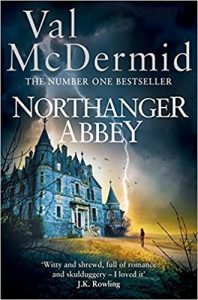
Cover quote: Northanger Abbey

Index ID: CQNA — Publication date: September 25th, 2014

Note: Cover quote for "Northanger Abbey" by Val McDermid.

Witty and shrewd, full of romance and skulduggery – I loved it.


The following images are related to this writing


Previous writing: «

Next writing: »

Celestina Warbeck

Index ID: PMCW — Publication date: August 18th, 2014

New from J.K. Rowling

Trait Description
Birthday 18th August
Wand Larch and phoenix feather, 10½ inches long, flexible
Hogwarts House Gryffindor
Special abilities Singing; Ability to drown out a chorus of banshees, tap-dancing, fancy baking
Parentage Wizard father, Muggle mother
Family Has married three times; one son
Hobbies Travelling in fabulous style, breeding rough-coated Crups, relaxing in any of her eight homes

Internationally-acclaimed singing sensation Celestina Warbeck (sometimes known as ‘the Singing Sorceress’) hails from Wales. Her father, a minor functionary in the Muggle Liaison Office, met her Muggle mother (a failed actress) when the latter was attacked by a Lethifold disguised as a stage curtain.

Celestina’s extraordinary voice was apparent from an early age. Disappointed to learn that there was no such thing as a wizarding stage school, Mrs Warbeck reluctantly consented to her daughter’s enrolment at Hogwarts, but subsequently bombarded the school with letters urging the creation of a choir, theatre club and dancing class to showcase her daughter’s talents.

Frequently appearing with a chorus of backing banshees, Celestina’s concerts are justly famous. Three devoted fans were involved in a nasty three-broom pile up over Liverpool while trying to reach the last night of her ‘Flighty Aphrodite’ tour, and her tickets often appear on the black market at vastly inflated prices (one reason why Molly Weasley has never yet seen her favourite singer live).

Celestina has sometimes lent her name and talents to good causes, such as raising funds for St Mungo’s Hospital for Magical Maladies and Injuries with a recording of Puddlemere United’s anthem Beat Back Those Bludgers, Boys, and Chuck That Quaffle Here. More controversially, Celestina was vocal in her disagreement when the Ministry of Magic sought to impose restrictions on how the wizarding community was allowed to celebrate Hallowe’en.

Some of Celestina’s best-known songs include You Charmed the Heart Right Out of Me and A Cauldron Full of Hot, Strong Love. Her fans are usually older people who love her grandstanding style and powerful voice. The late 20th-century album You Stole My Cauldron but You Can’t Have My Heart was a massive global hit.

Celestina’s personal life has provided much fodder for the gossip columns of the Daily Prophet. An early marriage to a backing dancer lasted only a year; Celestina then married her manager, with whom she had a son, only to leave him for the composer Irving Warble ten years later.

J.K. Rowling’s thoughts

Celestina is one of my favourite ‘off-stage’ characters in the whole series, and has been part of the Potter world ever since its inception, making an early appearance in the short-lived ‘Daily Prophet’ series I produced for members of the equally short-lived fan club run by my British publisher, Bloomsbury. Although we never lay eyes on Celestina during the whole seven volumes of the Potter books, I always imagined her to resemble Shirley Bassey in both looks and style. I stole her first name from a friend with whom I worked, years ago, at Amnesty International’s Headquarters in London; ‘Celestina’ was simply begging to be scooped up and attached to a glamorous witch.


Previous writing: «

Next writing: »

Illness and Disability

Index ID: PMILLD — Publication date: July 31st, 2014

I pondered the issue of illness and disability very early in the creation of Harry’s world. Did wizards catch colds? Could they cure illnesses that baffled Muggles? Were there disabled wizards? What were the limits of wizarding medicine, or could it fix anything? Some of these questions went to the heart of the story, because the theme of death runs through every volume of the Potter books. Having decided that magic could not raise the dead (even the Resurrection Stone does not truly return the dead to life), I then had to decide what might kill a wizard; what kind of illnesses they could catch; what injuries they might sustain, and which of the last two could be cured.

I decided that, broadly speaking, wizards would have the power to correct or override ‘mundane’ nature, but not ‘magical’ nature. Therefore, a wizard could catch anything a Muggle might catch, but he could cure all of it; he would also comfortably survive a scorpion sting that might kill a Muggle, whereas he might die if bitten by a Venomous Tentacula. Similarly, bones broken in non-magical accidents such as falls or fist fights can be mended by magic, but the consequences of curses or backfiring magic could be serious, permanent or life-threatening. This is the reason that Gilderoy Lockhart, victim of his own mangled Memory Charm, has permanent amnesia, why the poor Longbottoms remain permanently damaged by magical torture, and why Mad-Eye Moody had to resort to a wooden leg and a magical eye when the originals were irreparably damaged in a wizards’ battle; Luna Lovegood’s mother, Pandora, died when one of her own experimental spells went wrong, and Bill Weasley is irreversibly scarred after his meeting with Fenrir Greyback.

Thus it can be seen that while wizards have an enviable head start over the rest of us in dealing with the flu, and all manner of serious injuries, they have to deal with problems that the rest of us never face. Not only is the Muggle world free of such perils as Devil’s Snare and Blast-Ended Skrewts, the Statute of Secrecy has also kept us free from contact with anyone who could pass on Dragon Pox (as the name implies, originally contracted by wizards working closely with Peruvian Vipertooths) or Spattergroit.

Remus Lupin’s affliction was a conscious reference to blood-borne diseases such as the HIV infection, with the attendant stigma. The potion Snape brews him is akin to the antiretroviral that will keep him from the developing the ‘full-blown’ version of his illness. The sense of ‘apartness’ that the management of a chronic condition can impose on its sufferers was an important part of Lupin’s character. Meanwhile, Mad-Eye Moody is the toughest Auror of them all, and a man who was very much more than his significant disabilities.


Previous writing: «

Next writing: »

Pensieve

Index ID: PMPENS — Publication date: July 31st, 2014

A Pensieve is a wide and shallow dish made of metal or stone, often elaborately decorated or inlaid with precious stones, and carrying powerful and complex enchantments. Pensieves are rare, because only the most advanced wizards ever use them, and because the majority of wizardkind is afraid of doing so.

The perceived dangers of the Pensieve relate to its power over memory or thought. The Pensieve is enchanted to recreate memories so that they become re-liveable, taking every detail stored in the subconscious and recreating it faithfully, so that either the owner, or (and herein lies the danger) a second party, is able to enter the memories and move around within them. Inevitably, those with things to hide, those ashamed of their pasts, those eager to keep hold of their secrets, or protective of their privacy, will be wary of an object like the Pensieve.

Even more difficult than the recreation of memories is the use of a Pensieve to examine and sort thoughts and ideas, and very few wizards have the ability to do so. Albus Dumbledore is seen using the Hogwarts Pensieve in this way, notably in Chapter Thirty of Harry Potter and the Goblet of Fire, when he adds thoughts to the Pensieve and Harry’s face turns into Snape’s; Dumbledore is reminding himself of the hidden connection between Snape and Harry (that Snape was in love with Harry’s mother, and is now – though immensely grudgingly – honour-bound to protect him).

Traditionally, a witch or wizard’s Pensieve, like their wand, is buried with them, as it is considered an intensely personal artefact; any thoughts or memories left inside the Pensieve are likewise interred with their owner, unless he or she has requested otherwise. The Hogwarts Pensieve, however, belongs not to any individual but to the school. It has been used by a long line of headmasters and headmistresses, who have also left behind their life experience in the form of memories. This forms an invaluable library of reference for the headmaster or headmistress of the day.

The Hogwarts Pensieve is made of ornately carved stone and is engraved with modified Saxon runes, which mark it as an artefact of immense antiquity that pre-dates the creation of the school. One (unsubstantiated) legend says that the founders discovered the Pensieve half-buried in the ground on the very spot where they decided to erect their school.

The name ‘Pensieve’ is a homonym of ‘pensive’, meaning deeply, seriously thoughtful; but it also a pun, the ‘sieve’ part of the word alluding to the object’s function of sorting meanings from a mass of thoughts or memories.


Previous writing: «

Next writing: »

Owls

Index ID: PMOWLS — Publication date: July 31st, 2014

New from J.K. Rowling

The old British superstition that it is unlucky to see owls flying by daylight is readily explained, for when wizards break cover to send messages by day, something dramatic must be afoot in the magical world. Muggles may subsequently experience the unpleasant aftershocks, without any idea of their cause.

As a (mostly) nocturnal bird of prey, the owl is inevitably seen as sinister by Muggles, but it has been a faithful servant and helpmeet to witches and wizards for many centuries. In spite of the many alternatives available for magical communication across long distances, (including Patronuses, Floo powder, and enchanted devices such as mirrors and even coins) the faithful and reliable owl remains the most common method used by wizardkind across the world.

The advantages of owls as messengers are those very qualities that make Muggles view them with suspicion: they operate under cover of darkness, to which Muggles have a superstitious aversion; they have exceptionally well-developed night vision, are agile, stealthy and capable of aggression when challenged. So numerous are the owls employed by wizards worldwide that it is generally safe to assume that virtually all of them are either the property of the Owl Postal Service of their country, or of an individual witch or wizard.

Whether because they possess an innate bent for magic (just as pigs are reputed to be innately non-magical), or because generations of their ancestors have been domesticated and trained by wizards and they have inherited the traits that make this easy, owls learn very quickly, and seem to thrive on their task of tracing and tracking the witch or wizard for whom their letters are intended.

The mystical association between the name and the human who bears it has long been understood by witches and wizards of all cultures. While the process remains mysterious even to those who train up owlets to become wizarding pets or postal owls, the birds appear to be able to make such a connection between the name and its possessor that enables them to trace the witch or wizard concerned wherever he or she may be. An owl does not need to know an address, although witches and wizards generally add the place to the envelope on the off-chance that the owl is intercepted and the letter falls into other hands.

Should a witch or wizard not wish to be sent letters (or tracked in any other way), he or she will have to resort to Repelling, Disguising or Masking Spells, of which there are a great range. It is possible to protect yourself from all correspondence, or all but that carried by a specific owl. If a witch or wizard is determined not to be contactable by a persistent creditor or ex-boy or girlfriend, they might try a masking spell specific to that person, but this ploy is easily circumnavigated by asking somebody else to send the owl. In general, it takes strong protective magic, and a willingness to forego a lot of birthday cards, to avoid the attentions of Owl Post.

Trained owls are expensive, and it is quite usual for a wizarding family to share a single owl, or else only use Postal owls.

J.K. Rowling’s thoughts

My love of, and fascination with, owls long pre-dates the first idea for Harry Potter. I trace it to a cuddly owl toy that my mother made me when I was six or seven, which I adored. Of course, owls have been associated with magic for a long time, and feature in many old illustrations of witches and wizards, second only to cats as Most Magical Creature. The owl’s association with wisdom was established in Roman times, for it is the emblem of Minerva, goddess of wisdom.

Owl breeds shown within the Harry Potter books include the eagle owl (large, tufted and fierce-looking, owned by Draco Malfoy); the Little Owl (tiny, cute, but perhaps not very impressive, like Pigwidgeon, owned by Ron); and the Snowy Owl, which is also known as the Ghost Owl (Harry’s Hedwig).

I made a few elementary mistakes when it came to my depiction of Hedwig. Firstly, Snowy Owls are diurnal (ie, they fly by day). Secondly, they are virtually mute, so Hedwig’s frequent hoots and chirrups of approval and comfort should be taken as signs of her magically enhanced abilities. Thirdly, as countless well-meaning owl-lovers and experts kept writing to me in the early days, owls do not eat bacon (Hedwig enjoys a bit of bacon rind when she delivers post at breakfast).

When I dreamed up Errol, the aged, long-suffering and overworked Weasley family owl, I had in mind a picture I thought I had seen, which featured a very comical, large, fluffy, grey, bewildered-looking bird whose breed I had never known. In fact, I wondered whether it had been a real photograph, or whether imagination was distorting the image. It was with sheer delight, therefore, that I rounded a corner on my first ever visit to the aviary at Leavesden Studios, where they were filming Harry Potter and the Philosopher’s Stone, and saw a line of big, grey, fluffy, bewildered-looking owls blinking back at me, each an exact replica of the half-remembered picture I thought I might have dreamed. They were all playing Errol, and they are Great Greys.


Previous writing: «

Next writing: »

The Great Lake

Index ID: PMGRLAKE — Publication date: July 31st, 2014

New from J.K. Rowling

The grounds of Hogwarts function partly as a nature reserve for magical creatures which have difficulty existing in Muggle-inhabited areas.

The lake is full of creatures that would make a Muggle naturalist swoon with delight – if terror did not seize them first. There are Grindylows (vicious little water demons), merpeople (of a hardy Scottish strain) and a giant squid, which is semi-domesticated and permits students to tickle its tentacles on sunny days, when it basks in the shallows.

Giant squid genuinely exist, though they are most mysterious creatures. Although their extraordinary bodies have been washed up all over the world, it was not until 2006 that a live giant squid was captured on film by Muggles. I strongly suspect them of having magical powers.

J.K. Rowling’s thoughts

The lake is the setting for the second task that the Triwizard competitors must face in Goblet of Fire, which is also my favourite task. I find it satisfyingly creepy; I like the diversity of the methods employed by the competitors to breathe underwater, and I enjoyed plumbing the depths of a part of the grounds that had never been seen before. In the original draft of Chamber of Secrets, I had Harry and Ron crash into the lake in Mr Weasley’s Ford Anglia, and meet the merpeople there for the first time. At that time I had a vague notion that the lake might lead to other places, and that the merpeople might play a larger role in the later books than they did, so I thought that Harry ought to be introduced to both at this stage. However, the Whomping Willow provided a more satisfying, less distracting crash, and served a later purpose in Prisoner of Azkaban, too. The Great Lake (which is really a Scottish loch, apparently freshwater and landlocked) never did develop as a portal to other seas or rivers, although the appearance of the Durmstrang ship from its depths in Goblet of Fire hints at the fact that if you are travelling by an enchanted craft, you might be able to take a magical shortcut to other waterways.


Previous writing: «

Next writing: »

The Silkworm

Index ID: SW — Publication date: June 19th, 2014

Note: Published as Robert Galbraith.
Only the beginning of this text can be displayed here for research purposes. I apologize!

“Someone bloody famous,” said the hoarse voice on the end of the lne, “better’ve died, Strike.”


Previous writing: «

Next writing: »